


What Is Bing SEO? What Are the Differences Between Bing and Google SEO?
Although Google-focused SEO efforts are common, today Bing search engine SEO efforts are quite important. Bing SEO aims to optimize websites according to Bing’s ranking algorithms and, at some points, has dynamics that differ from Google SEO. In this article, we will discuss what Bing SEO is and the main differences between Bing and Google SEO.
What Is Bing SEO?
Bing SEO refers to the search engine optimization efforts carried out so that websites can rank at the top on Bing, Microsoft’s search engine. Although it is based on similar fundamentals to Google SEO, Bing has different algorithm signals, ranking criteria, and user behaviors. For this reason, in Bing SEO efforts, on-page optimization, backlink quality, social signals, and analyses performed via Bing Webmaster Tools are particularly important. Thanks to Bing SEO efforts, websites become more visible in Bing search results. In this way, an increase in organic traffic and the opportunity to gain users from alternative search engines can be captured.
Why Is Bing SEO Important?
Although when people say SEO, they first think of Google optimization, Bing SEO has now become an important traffic source. Thanks to Microsoft’s ChatGPT integrations, the Edge browser, and Windows default settings, Bing’s user count is increasing rapidly.
Bing processes more than 1 billion search queries per month worldwide and drives more than 25% of desktop searches in the US. (See:https://searchendurance.com/microsoft-bing-statistics/) In addition, Bing users generally consist of people with higher income levels, in the 35-54 age range, and with a high purchase intent. Bing offers fewer ads and cleaner search results, which provides an advantage in terms of organic visibility.
Moreover, AI-supported assistants such as Alexa, Cortana, and ChatGPT get their data from Bing’s search infrastructure. In other words, content that is not visible on Bing may not find a place in these new search channels either.
Bing Ranking Factors
To achieve a better position in the Bing search engine and to optimize your website in terms of Bing SEO, certain criteria should be taken into consideration. Just like the content, technical, and backlink optimizations carried out in Google SEO, it is also necessary to pay attention in optimizations carried out specifically for Bing.
Keyword Usage
Keyword usage, one of the basic SEO criteria, is important for Bing SEO.
- An exact keyword match in the title tag is a strong ranking signal for Bing.
- The keyword appearing in the H1 is important to an almost mandatory degree.
- Keyword usage in the first paragraph and especially within the first 100–150 words increases the relevance signal.
- Since keyword usage in the meta description increases CTR, it affects ranking not indirectly, but directly.
- Unlike Google, Bing places more weight on keyword clarity.
Domain Age and Trustworthiness
One of the important criteria in Bing SEO is domain age and trustworthiness. 3+ year-old domains are advantageous compared to new sites with the same authority. A penalty, spam, or ownership change in the domain history creates a negative signal. Brand searches (brand queries) are evaluated as a trust signal. Whois information being consistent with the company and public creates an additional trust signal.
Backlink Quality and Authority
Backlinks are one of the important factors for both Google SEO and Bing SEO. Bing looks not so much at the number of backlinks, but at the authority of the source and contextual relevance. Even a small number of links coming from relevant, high-authority sites can seriously increase ranking. Anchor text is a stronger signal in Bing compared to Google, so exact-match anchor text increases authority transfer. Links coming from the same IP block or from PBN-style networks are considered manipulative. Natural backlinks embedded within content are much stronger than footer/sidebar links.
Social Media Signals
Bing officially accepts social interactions as a ranking factor. Shares, comments, and viral interactions show that content is “popular” and increase visibility. Shares made by large authoritative accounts produce a much stronger signal. Social media traffic creates an extra positive signal because it increases time spent on the site.
Content Quality and Depth
Short content that explains the topic superficially is evaluated as “thin content” and causes a ranking loss. In-depth, comprehensive content supported by sources ranks better. Content created on websites should meet the user’s search intent in one go. If the user goes back and clicks another site, Bing marks this as a negative signal. Real data, quotes, images, tables, and examples directly increase content quality. Content filled with ads is perceived as low quality by Bing.
User Experience and Site Speed
For Bing, the ideal loading time is under 3 seconds. With excessive JavaScript usage, content loading late can directly reduce ranking. Mobile compatibility is an almost mandatory ranking criterion in Bing mobile results. High ad density produces a negative quality signal because it disrupts user experience. Pogo-sticking (the user entering the page and immediately leaving back) is seen by Bing as a clear dissatisfaction signal.
Content Relevance (Relevance)
Bing moves content that “answers the query directly and clearly” to the top. Whatever intent the user is searching with (information, purchase, comparison), the content should be suitable for that. Content containing irrelevant or general statements easily falls back in ranking. If there is a mismatch between the keyword and the on-page title and content theme, a ranking loss may occur.
Content Originality and Trustworthiness
Content that gives the impression of being copied, stolen, or rewritten is detected quickly by Bing. The content must offer original value; changing only the title will not be enough. Author information, a bibliography, and clear transparency directly increase the quality signal. Misleading, exaggerated, or clickbait content leads to a loss of trust.
Structured Data (Schema Markup)
Bing has a flexible and broad approach to understanding structured data; it aims to better understand the content on web pages by interpreting different markup formats such as JSON-LD, Microdata, and RDFa smoothly. It strongly evaluates schema types that carry brand and trust signals, such as Organization, LocalBusiness, PostalAddress, and ContactPoint, and these markups directly increase Bing’s perception of trust about the site.
In image search, it aggressively uses ImageObject data; it highlights this content by processing images’ description, license, size, and copyright information. On the video side, VideoObject also plays an important role because Bing actively uses fields such as duration, description, interaction count, and thumbnail to make video content more visible in the SERP.
Person schema is of critical importance for identifying content producers, experts, and authors more accurately in Bing AI and Bing Chat results. Bing is generally tolerant of schema errors, but when proper markup is implemented, content classification, image and video visibility, brand information, and authority signals are strengthened; this provides better visibility and stronger ranking performance in the Bing ecosystem.
Bing Places for Business is a free local business management platform that enables businesses to appear on Bing search results and Bing Maps. You can think of it as Bing’s equivalent of Google Business Profile. With Bing Places, while you can create and manage their listings more easily on Bing Search and Bing Maps, you can gain the opportunity to increase your local visibility and engagement with the improved Google import process and intuitive management tools.
Tired of reading?
You can also listen to this blog post as a podcast we created with Google NotebookLM on Spotify.
Technical Optimization
- If robots.txt is misconfigured, important pages will not be indexed. Especially with wildcard usage in the robots.txt file, Bing may not support some uses or may interpret them differently. Therefore, complex wildcard usage in the robots.txt file should be avoided. Bing may time out when crawling very long robots.txt files or may skip lines. Therefore, it is recommended to keep the robots.txt file in a simple structure.
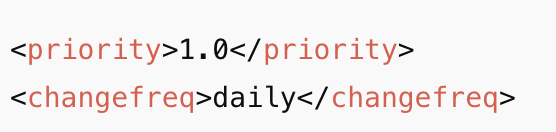
- Bing is quite strictly dependent on the sitemap. If a URL is not included in the sitemap, Bing perceives this URL as less important and reduces crawl frequency. When the sitemap URL returns a 301 or 404 status code, Bing perceives the sitemap as low reliability and reduces its importance. Therefore, you should make sure that your website’s sitemap is working properly. Bing directly reflects the priority value as “the page’s importance level” and the changefreq value as the “expected update frequency” into its crawl strategy. You can add the relevant values when creating the sitemap. In addition, if last mod has changed in the sitemap, Bing increases the crawl frequency of the relevant URL, but if last mod is stable, it may reduce the crawl frequency and consider it unimportant. In addition, Bing gives crawl priority to IndexNow. Therefore, it is recommended to use IndexNow in addition to the sitemap. In Bing’s official documentation, it recommends using IndexNow.
- All important content must not be hidden inside JS.Bing’s JavaScript rendering capacity is limited compared to Google. For this reason, content loaded only via JS may lead to indexing issues. If headings, texts, product lists, category content, menu links, or meta tags (title, description, canonical) are generated dynamically with JavaScript, Bing often cannot see these elements and marks the page as “empty” or “insufficient content.” In this case, the page is not indexed, its inclusion in the index is delayed, or it may be evaluated as irrelevant content and fall back in ranking. Therefore, in Bing SEO, critical content must be presented within HTML, directly visible before the page loads; in other words, using SSR/SSG, keeping the menu and internal links in static HTML, and loading only supporting elements with JS is the most correct approach.
- By using the Bing Site Scan technical SEO audit tool available within Bing Webmaster Tools for free, you can carry out the technical SEO analysis of your website. With the Bing Site Scan audit tool, it reports technical SEO items such as; number of pages crawled, broken links (404/500 errors), duplicate and missing meta tags (title & description), redirect chains, canonical errors, indexability issues, robots.txt and meta robots blocks. In addition, the tool may help you track the impact of the improvements made and measure the development in technical SEO performance by providing a comparative summary with previous crawls.
Mobile Compatibility and Accessibility
Responsive design is critical for mobile rankings. Images that overflow on mobile, scrolling issues, faulty buttons lower ranking. Bing especially takes a seamless appearance in the Edge browser as a quality signal. Accessibility (alt tags, contrast, clear buttons) strengthens user experience.
User Engagement (Engagement Signals)
Bing uses user engagement directly as a ranking factor and adopts a much clearer approach in this regard compared to other search engines. Users’ click-through rate (CTR) from the SERP, time spent on the page (dwell time), and entering the page and immediately going back to click another result (pogo-sticking) are strong quality signals for Bing; that is, the higher user satisfaction is, the higher the page rises, and if satisfaction drops, Bing interprets this immediately as a negative signal. At this point, Microsoft Clarity, Microsoft’s own user behavior analysis tool, plays an important role. Clarity is naturally compatible with the Bing ecosystem and enables you to see where users struggle or where they are satisfied on your site by collecting behavioral data such as heatmaps, click behaviors, session recordings, scroll depth, and rage clicks. By installing the Microsoft Clarity tool for free, you can access the analyses mentioned above. You can take a look at the Microsoft Clarty usage guide.
Freshness (Freshness Signals)
Bing uses freshness as an important ranking signal and directly evaluates whether content is up to date, especially in news, technology, product, price, travel, and trend-focused queries. However, Bing’s perception of freshness does not look only at updating the content date; it examines at the code and content level whether the page has actually been updated. In other words, just changing the date or adding a few words produces no freshness signal for Bing. Bing accepts as a real update situations where the content has been meaningfully revised, data has been refreshed, new examples have been added, sources have been updated, and it has been enriched in a way that users would prefer to visit again.
What Are Bing’s Differences from Google?
- Bing places much more importance on keyword matching; the exact-match keyword appearing in the title, H1, and the first paragraph directly affects ranking.
- It uses social media signals as an official ranking factor; shares, likes, and especially large account interactions increase ranking.
- It is more selective about backlinks; few but authoritative and relevant links provide a strong jump, and the anchor text effect is much higher compared to Google.
- User engagement is a direct ranking signal; CTR, dwell time, and pogo-sticking behaviors clearly affect quality.
- Content depth is more important on Bing; sourced, explained, comprehensive content is moved to the top.
- Its JavaScript processing capacity is weak; content loaded via JS is often invisible and not indexed.
- It offers very fast indexing with IndexNow; new or updated pages are reflected in the SERP within minutes.
- It aggressively highlights image and video content; correct alt tags, high-resolution images, and video schema provide higher visibility on Bing.
- It evaluates HTTPS and security protocols much more strictly; sites without HTTPS or with mixed content cannot rise to the top.
- It gives more importance to URL structure than Google; short, clean, keyword-rich URLs are a strong quality signal.
- It is strict about language detection; if the HTML lang tag and the content language do not match, rankings drop quickly.
- It indexes PDF and Office files better; PDF/Word-heavy sites may perform better on Bing.
- It assigns more meaning to domain extensions; extensions such as .gov, .edu, and .org create authority signals more strictly on Bing.
- It is more sensitive to low-quality ad placements; aggressive ads at the top of the page directly reduce quality.
- It behaves much more clearly on duplicate content; if the content is the same, Bing marks it as “duplicate” and lowers ranking.
- It actively uses accessibility signals; alt tags, contrast ratios, ARIA tags, and clean button structure increase quality.
- It sees brand searches as a strong trust signal; brand queries quickly increase domain authority.
- It cuts crawl budget quickly; on slow sites with many redirects or 404 errors, Bingbot reduces crawling in a short time.
- It interprets the number of images as a quality metric; long content without images may be perceived as low quality on Bing.
- It views exact-match domain (EMD) usage positively; domains that match the keyword exactly gain authority faster on Bing.
- Bing uses users’ browsers and system-level behavior signals much more directly than Google. In particular, interactions coming from the Edge browser + Windows ecosystem (clicking a site after a search, time spent on the site, going back and moving to another result) can affect Bing rankings quickly and visibly.
References
- https://support.microsoft.com/en-us/topic/how-bing-delivers-search-results-d18fc815-ac37-4723-bc67-9229ce3eb6a3
- https://www.bing.com/webmasters/help/webmaster-guidelines-30fba23a
- https://www.grazitti.com/blog/bing-seo-tips-how-to-rank-high-on-bing/
- https://www.searchenginejournal.com/google-vs-microsoft-bing/400855/
- https://www.searchenginemonkey.com/mastering-bing-seo-guide/
- https://seosherpa.com/bing-seo/


