



The Overlooked Report: Search Console Country Analyses
Most of us look at the Google Search Console country report from time to time. In fact, if our site only serves Turkey, we might look at it maybe once every 6 months. In this article, I will try to explain why the country report is important, its significance for international SEO, and which analyses you can use it for to get actionable outputs. In my opinion, it is a report that should be utilized when doing market analysis or GEO studies. So, let's get started!
Cannibalization Between Countries
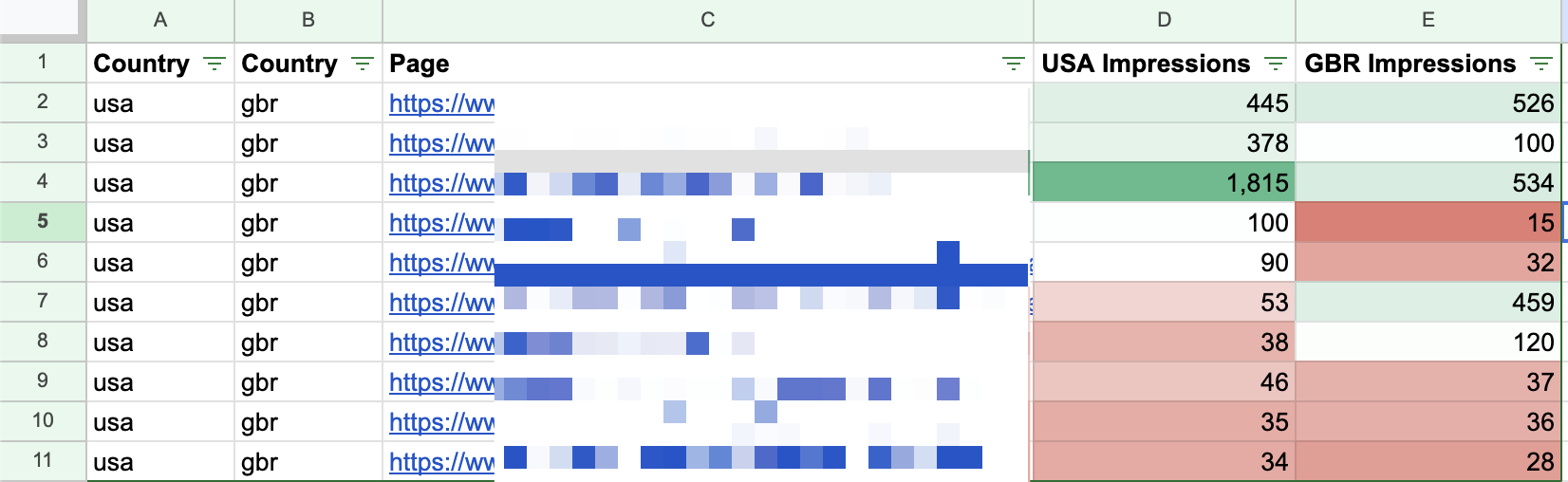
Especially in English queries, even if you do all technical SEO practices correctly, you can still receive traffic from the USA or other countries that speak that language, even if your target country is the UK. You can analyze which countries are competing with each other in your KPI keywords, or whether subfolders like /en/ or /us/ on your site are causing cannibalization with each other.

You can test whether there is correct usage on pages where you apply hreflang & canonical. In some cases, while applying hreflang, it can provide pages that do not have a counterpart, or we can mix up country codes. Even non-existent hreflangs for targets like the European Union can be added to pages. In projects like migration, you can also detect redirect/hreflang errors by examining this report in detail.
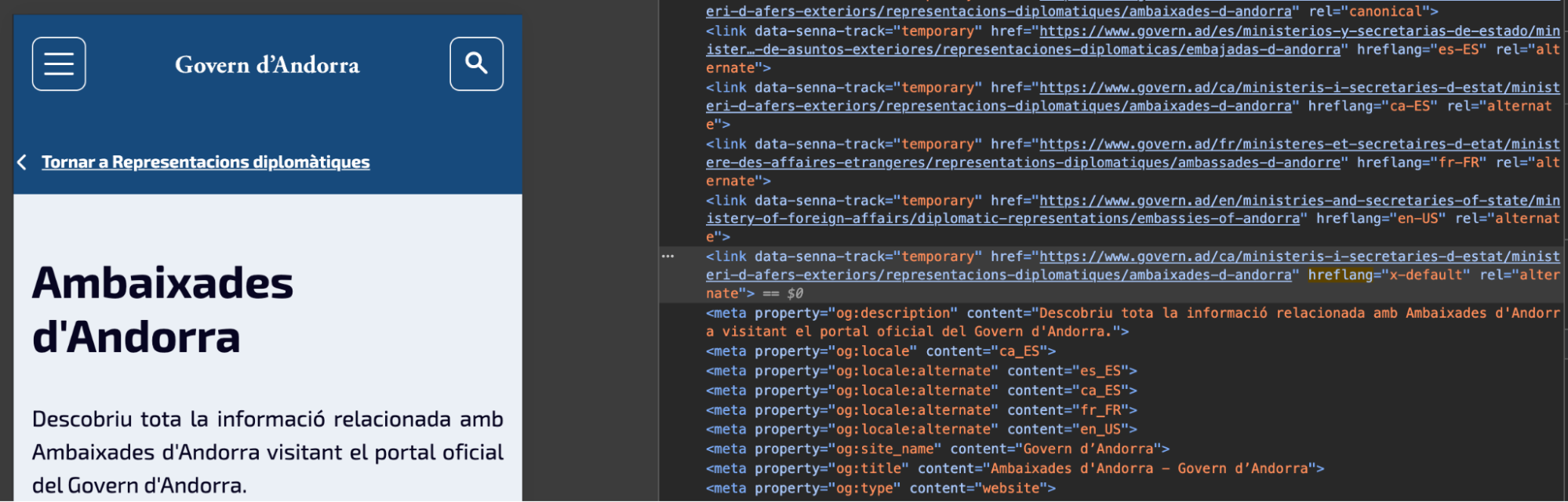
If your unwanted or unsuitable pages appear in the SERP in a scenario where you did your SEO work completely right, there is not much we SEO professionals can do here. Google systems may have found another URL more suitable, or this could be a bug that needs to be fixed in the future.
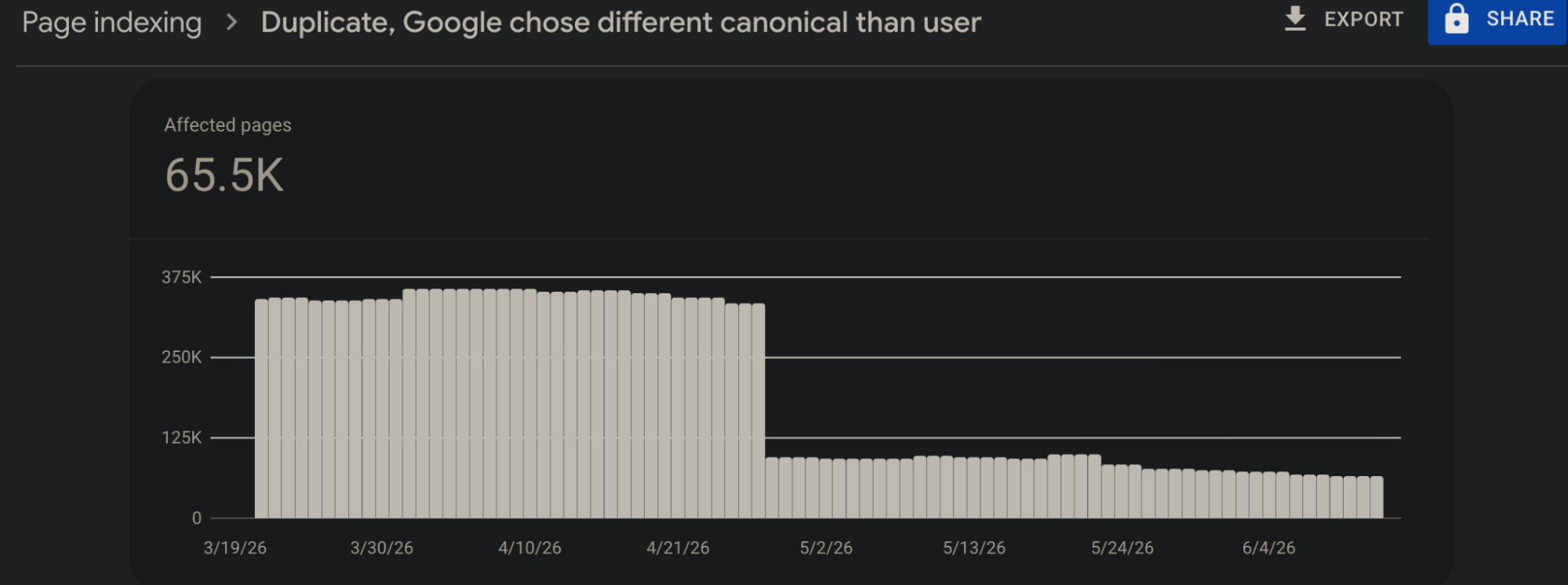
I asked John Mueller why the Turkish Republic of Northern Cyprus does not appear in Console, but I could not get a clear answer. If you have a client in the TRNC, you can look at the Cyprus or Unknown Region country filters.
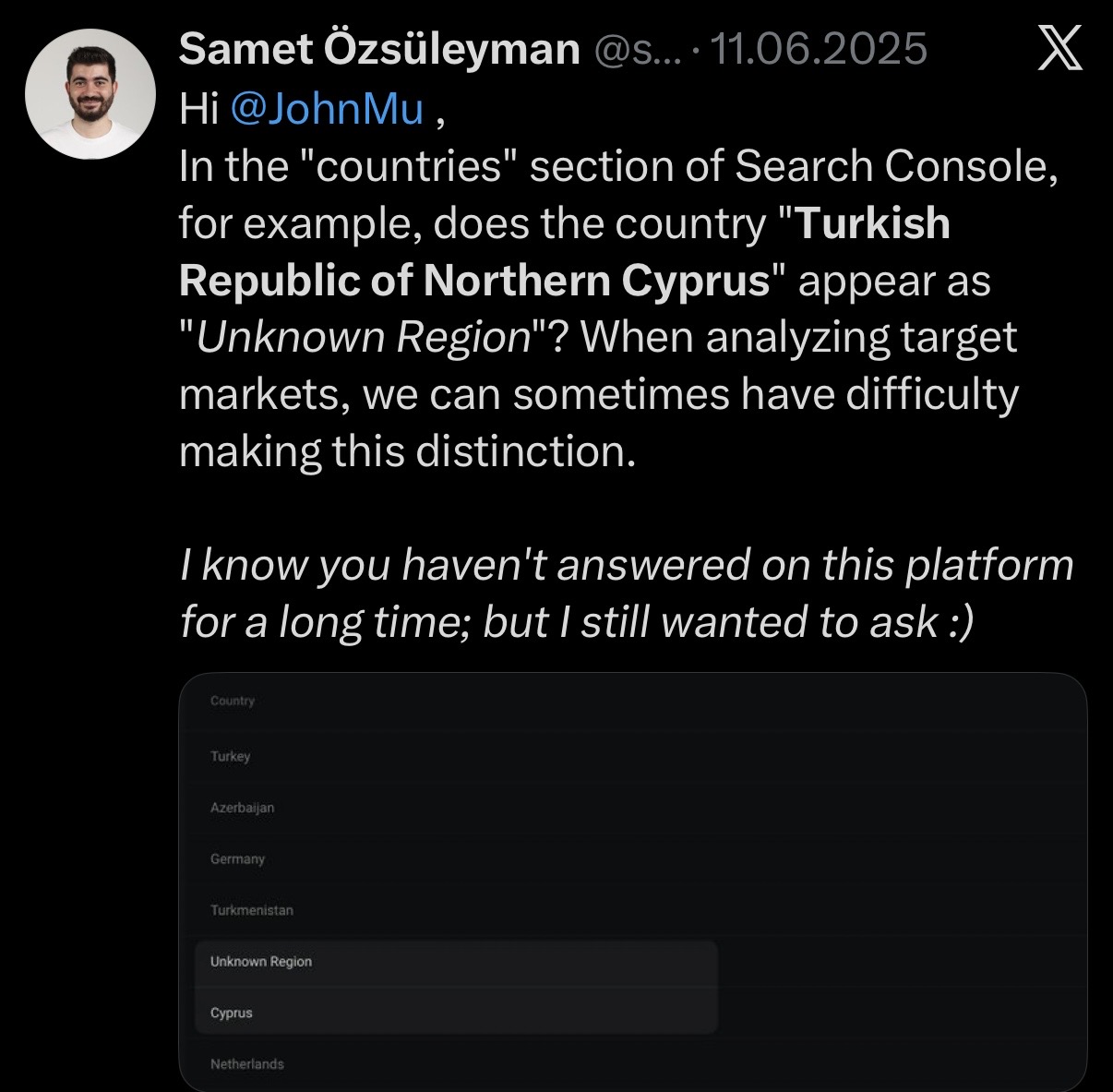
Average Position Analysis
When we open the performance report, for example, we see "6.2" on the screen; this average is actually the unweighted average of all countries. Data is grouped by the countries where the search was conducted. In a query, you might rank 3rd in Turkey and 10th in Austria. It will always be useful to look at and make decisions based on these kinds of averages according to country breakdowns.
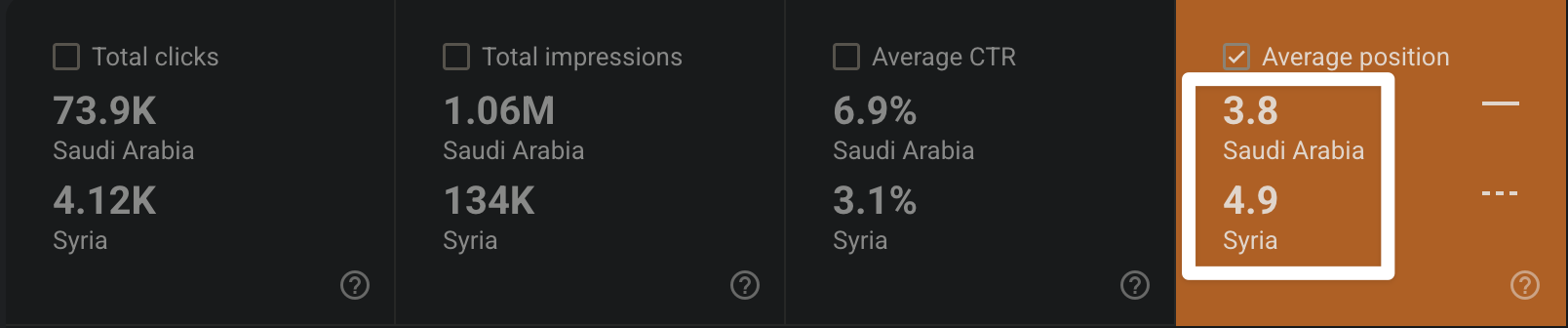
Also, while a keyword that is important to you might rank first in one of your target markets, it might rank 5th in your secondary market. Looking at global averages can mislead you when making decisions, so I always recommend making analyses according to the target country.
How Many Countries Are Included in the Search Console Performance Report?
I examined many Google properties and saw that a maximum of 244-245 countries are reported.
Do not forget to add separate properties in Search Console for each market. This way, you will avoid hitting limits as much as possible and have the chance to obtain more data.
Change in Page Types
You can rank with different page types in the market you serve. For example, if you have an e-commerce site, while you rank with PDPs in queries belonging to certain product groups in Germany, you might appear with different page types like PLP in the same product groups in Austria. Creating a country + page type breakdown report also prevents targeting with the wrong page type in the respective market.
Google Updates
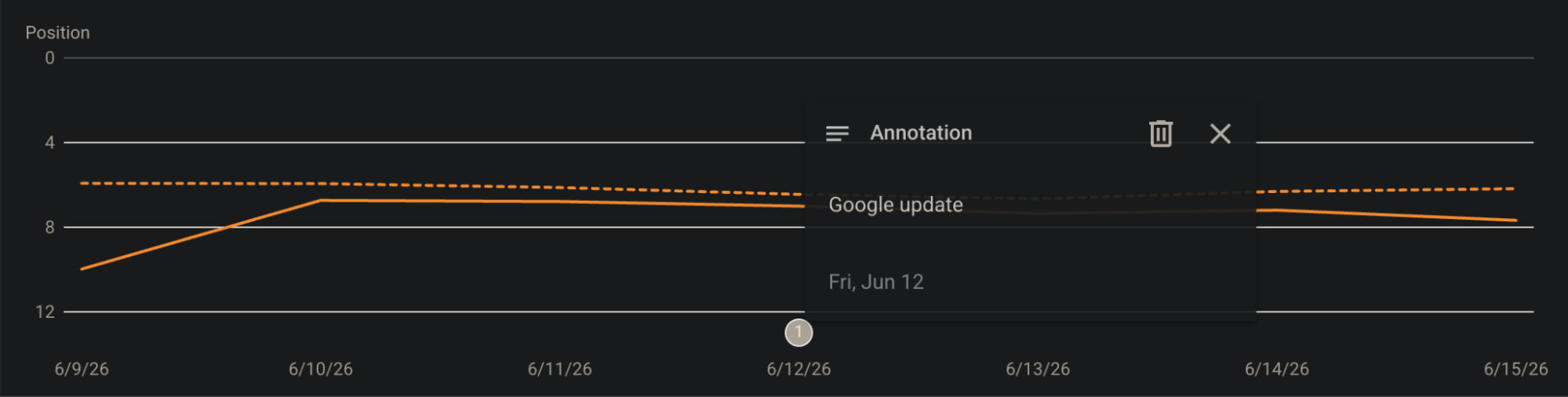
If there is a drop in only one country after Google updates, the problem may not be site-wide, but specific to the ccTLD or subdomain/subfolder. When analyzing a Google update, you can do it with a country breakdown. Sometimes you may feel the effects of unofficial, minor algorithm updates in different markets. If you serve different countries, you can check whether your Discover traffic on your news sites -not just web results- is affected by these updates.
Tired of reading?
You can also listen to this blog post as a podcast we created with Google NotebookLM on Spotify.
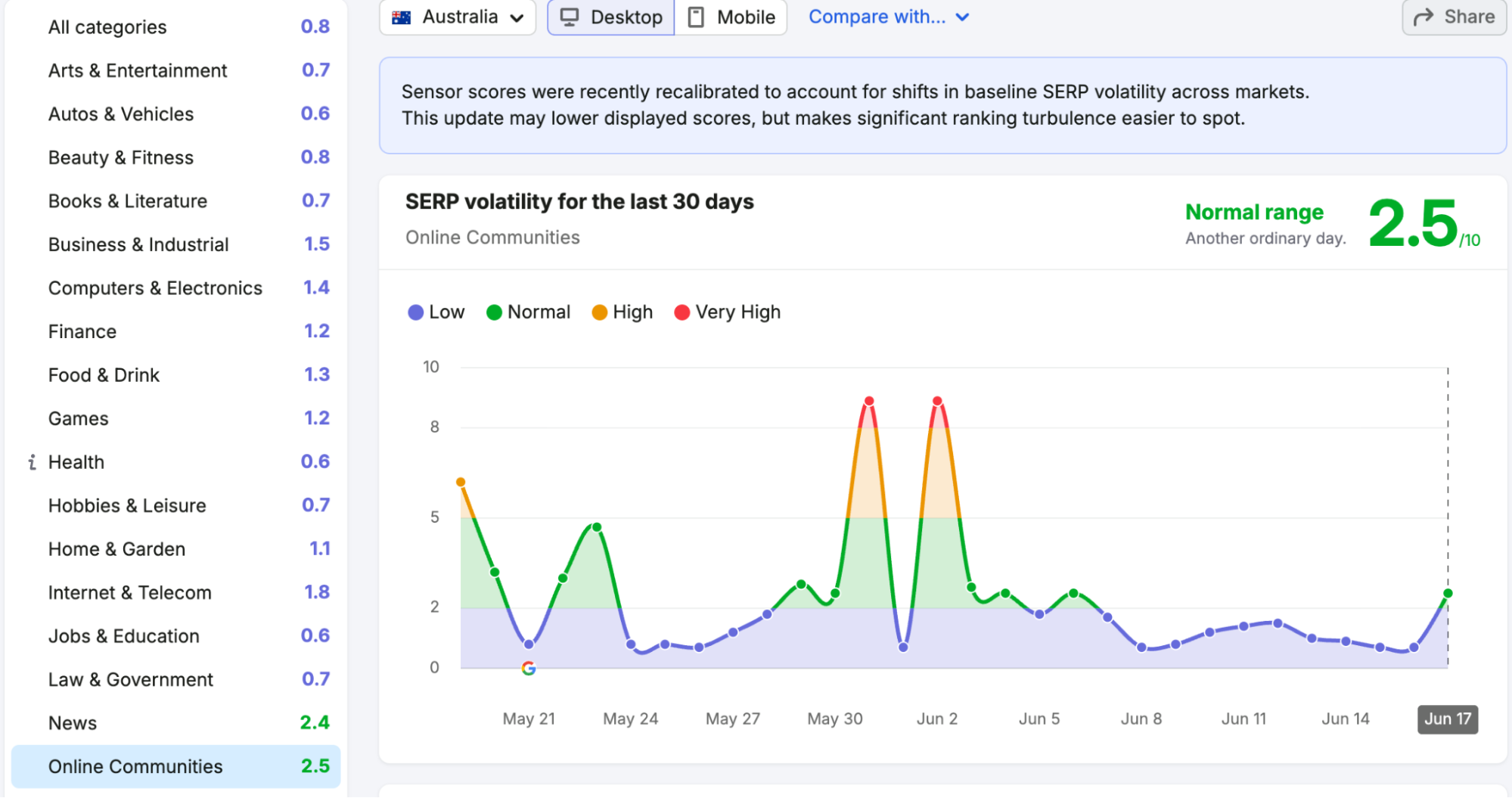
Additionally, if there are SEO tests you want to try, you can apply them in different markets to more clearly understand whether the updates had a positive or negative impact. You can perform industry volatility checks with tools like Semrush.
Impression and CTR Opportunities
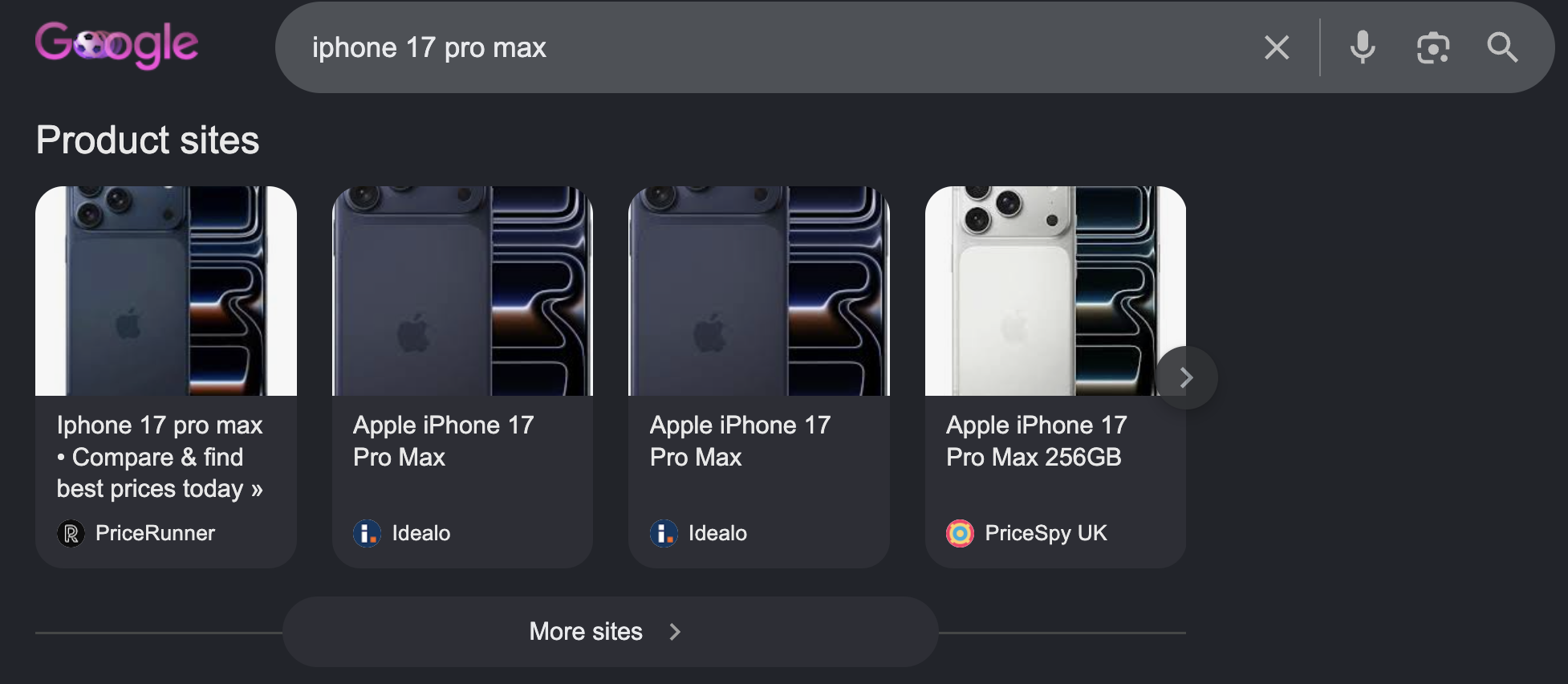
If you are getting very high impressions in a country, but the CTR remains low, you may have issues regarding localization. Google shows us a lot, but we cannot get clicks in the SERP. SERP features can vary between countries. Since markets like the USA have new features that we haven't seen before in TR, you can analyze what is happening on the SERP. How are features like AIO or AI Mode applied? You can report details such as what my competitors are doing differently from me in shopping results.
Aside from SERP analysis, you can also look at the following:
- Local language: Your title or meta description elements may not be suitable for that market. Because AI translation can sometimes be incorrect, your click-through rates may remain low.
- User intent: You can look at whether you have pages matching the search intent in searches such as "iPhone 17 Pro pricing".
- Google Business Profile: In local queries like "city name + service/appointment", does Google Maps show up? If so, you can prioritize GBP optimizations.
- Schema: If you have an e-commerce site, you can check that fields like price, priceCurrency, and, if available, isVariantOf within the Product schema are specific to that country.
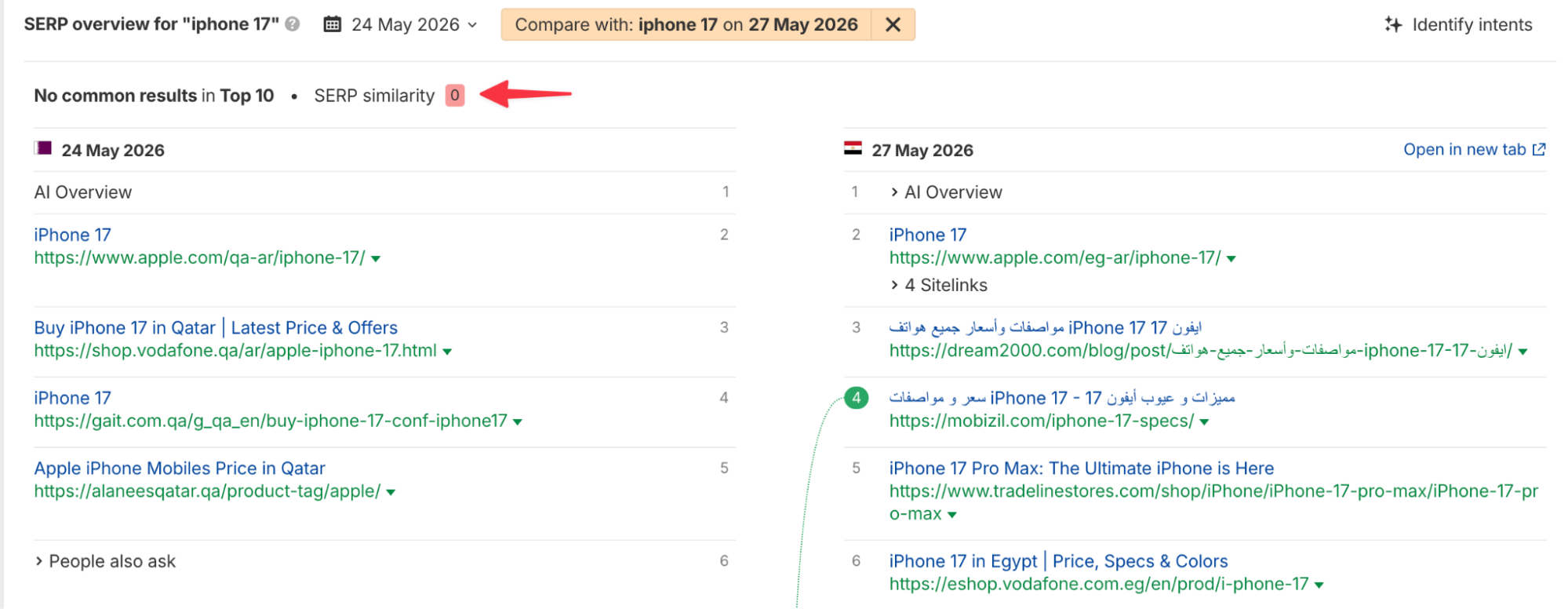
After data accumulates for a certain period, you can list the target countries where impressions are high but the TO (CTR) is below the global average, and prioritize accordingly. Since the SERP structure is different in each country, it will be useful to evaluate the TO (CTR) between Qatar and Egypt separately, for example. In the example below, while SERP similarity appears as 0, features like People also ask are located higher up in Qatar, for instance:
You can also analyze image searches. The taxonomy of each keyword in image results can be different, and you can see more clearly what you want to target here:


Trend Growth & User Needs
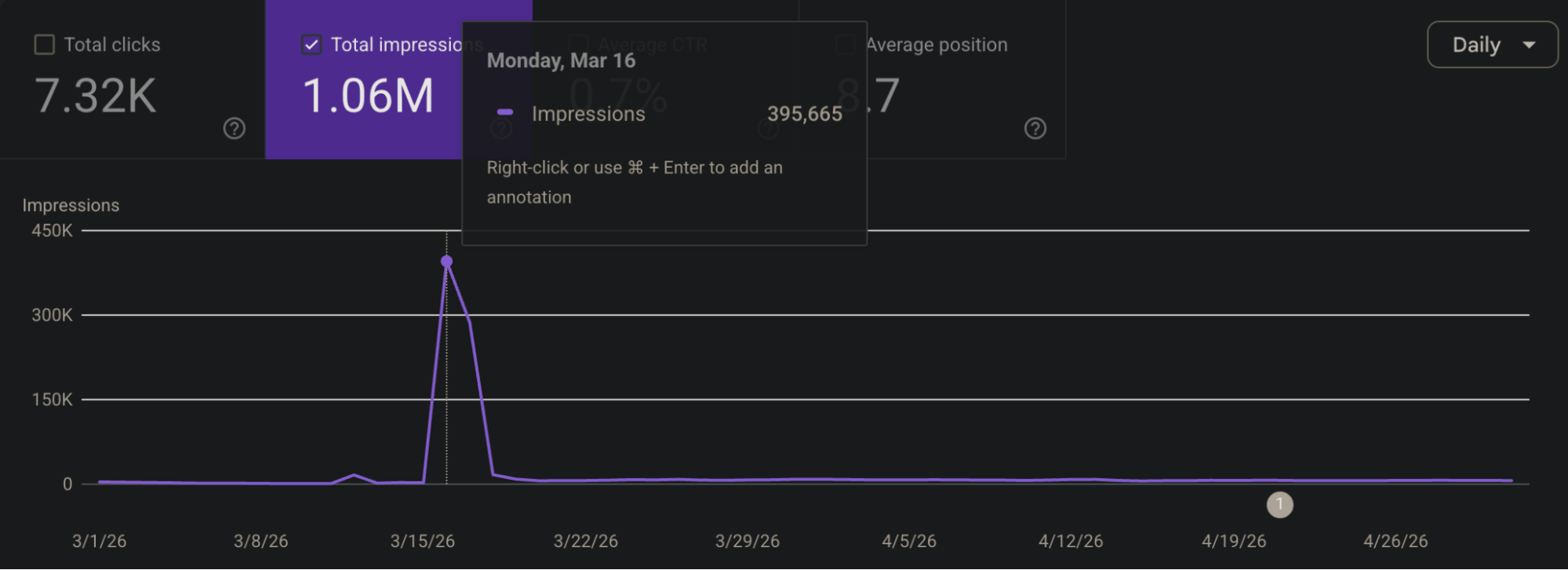
When we look at all data in Search Console, since there is already a 1k limit in the interface, we might miss it if there is an increase in brand or other queries related to us in countries like Thailand. In monthly analyses, if there is an increase in certain keywords on specific days, this can be an opportunity for you. In my opinion, you can also focus on brand queries here. Users might see and click on you on Google, but they might not be able to place an order because they cannot get information on topics such as how shipping to Vietnam will be done or whether local payment methods are supported.
CPC & RPM Data
Looking at traffic coming from countries based on per capita GDP will not be a very logical decision. Receiving high impressions from a low-income market does not mean that traffic will bring you conversions.
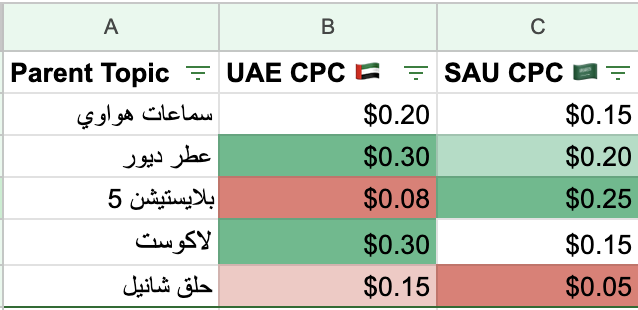
You can look at the country-based CPC values of your top keywords using tools like Google Ads Keyword Planner or Ahrefs. If you take this action, you will not be doing SEO to bring traffic, but doing SEO to generate revenue. By looking at CPC values, if your target market covers a wide geography, you can divide countries into Tier 1 & Tier 2. CPC can vary in small markets.
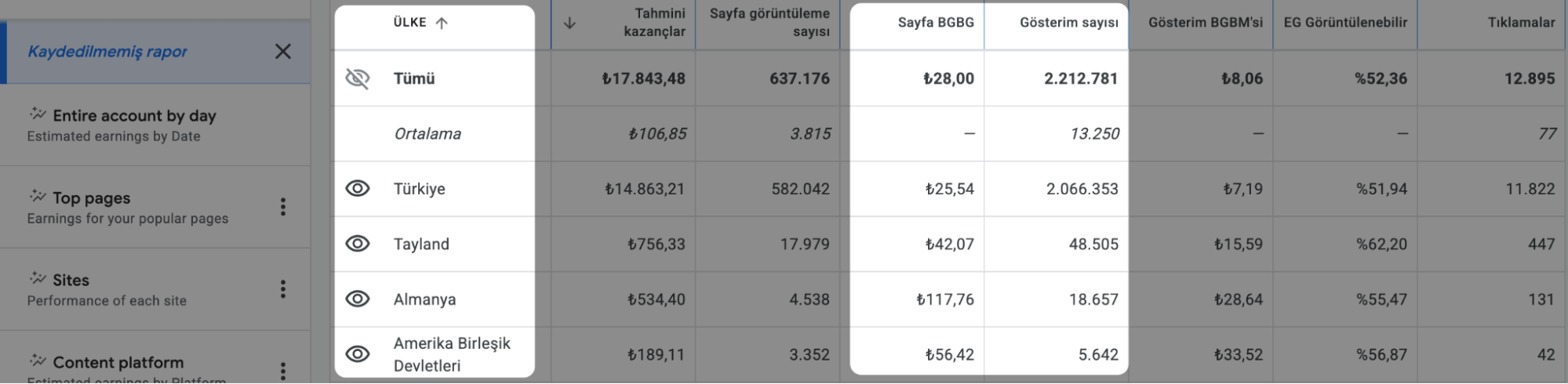
If you are a Google Adsense publisher, you can add the Search Console data in addition to the page BGBG (RPM) to the example country report below. This way, you can detect the RPM in the market more clearly.
Distribution of Brand Awareness by Country
By separating Search Console keywords into those that contain a brand name (there is already a branded filter), you can perform country-based awareness or CTR analysis. You can see the status of your visibility in brand queries across different countries for the same spoken language, like Arabic, for instance. If you are running a TV ad or a social media campaign, you can observe its effects on Google from here.
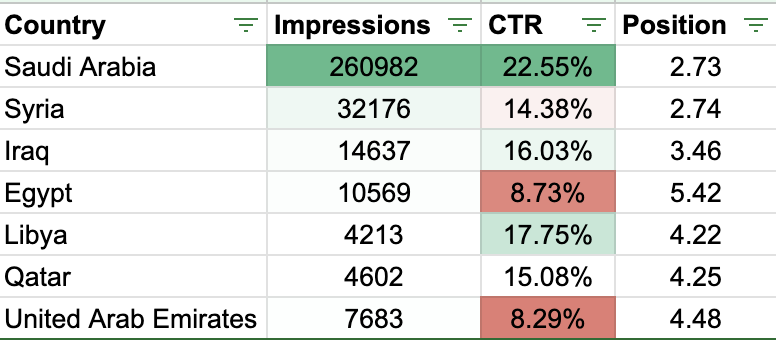
Proportioning impression data to the population with internet access, rather than the country's total population, can provide good insights for those who want to do more in-depth analysis.
Core Web Vitals
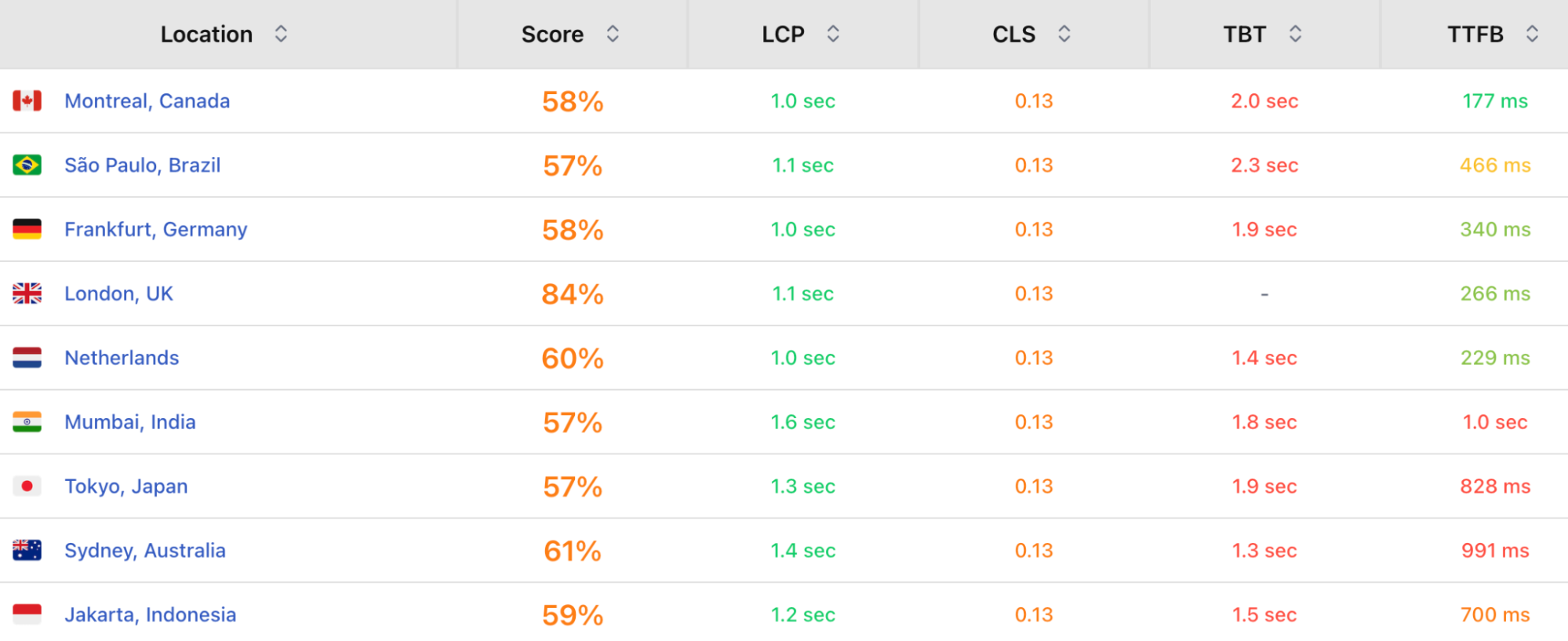
Getting indexed in your target markets does not mean that your site is fast in that market or that it satisfies users. Therefore, you can analyze your country-based page speeds. You can optimize server response times (TTFB), analyze the status of metrics like LCP or CLS first, and then take action if there is any to be taken.
In a market with a slow internet connection, heavy pages can increase bounce rates and negatively affect metrics such as time on page. In other words, your pages with the same design might perform well in a market with a fast internet infrastructure while experiencing ranking loss in slow-connection markets.
Seasonal Searches
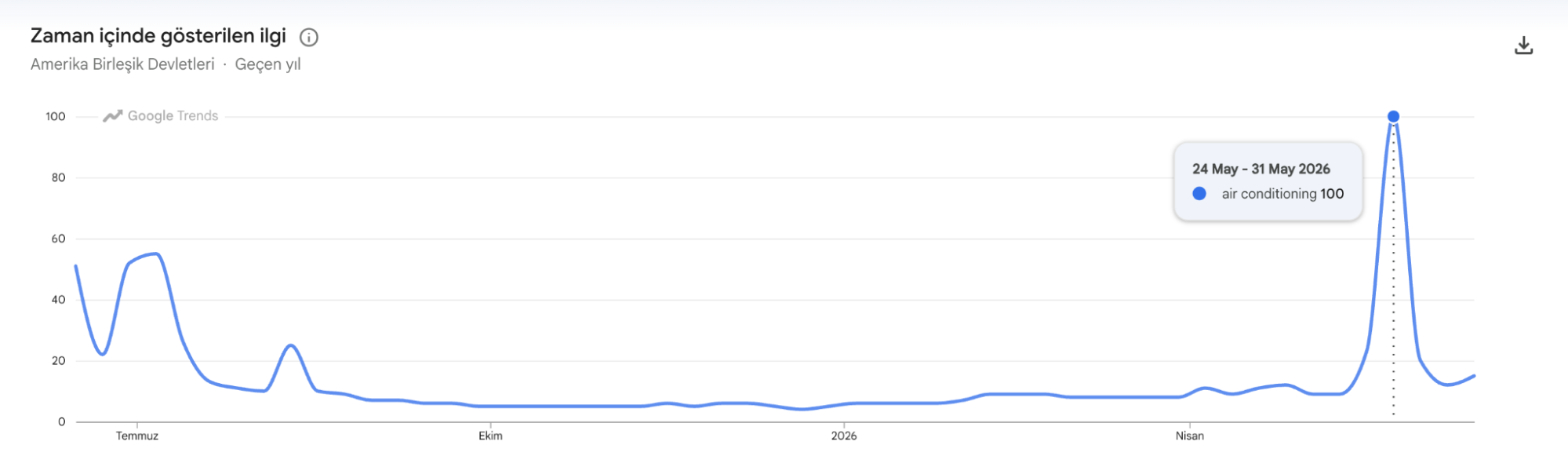
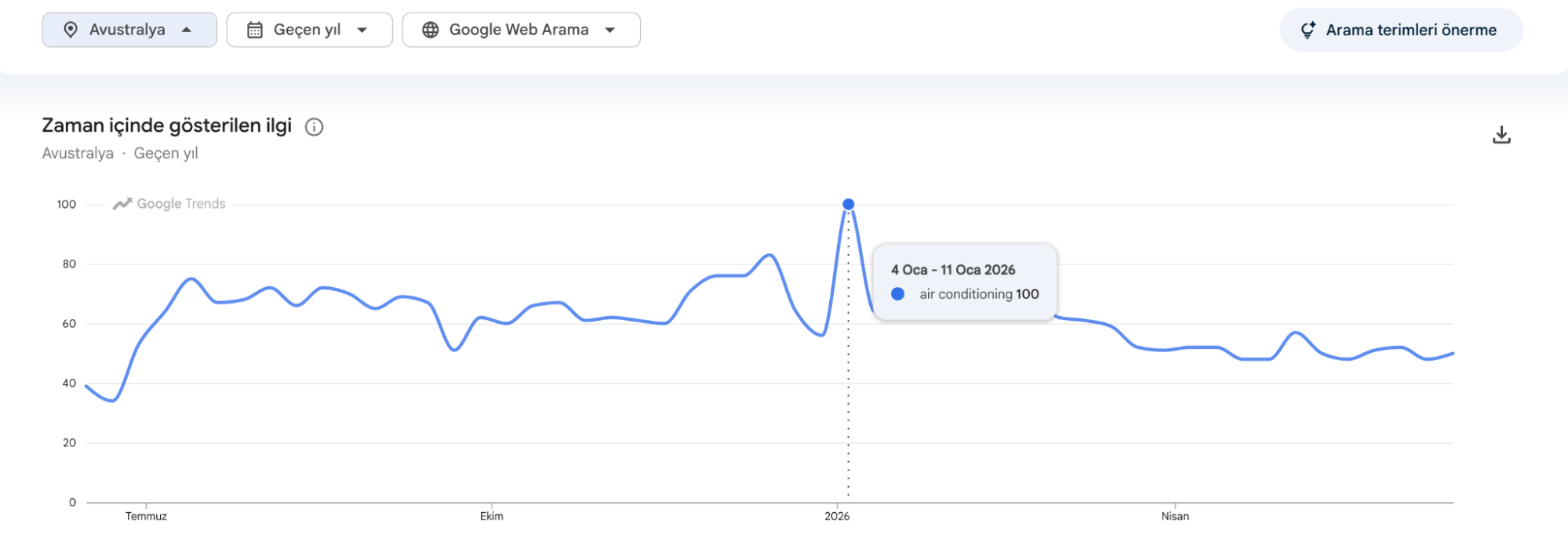
Due to seasonal differences between the northern hemisphere and the southern hemisphere, products sold in target markets can be completely different. For example, while searches like air conditioning, vacation, or swimwear show an increase in countries located in the northern hemisphere during June - August, you can see the same increases in countries like New Zealand during the December - February period. Likewise, the month of Ramadan moves backward by about 11 days every year. You can check the changes here by looking at your site's YoY data in the MENA region. If you separate countries according to seasonality, climate change, and religious holidays, it will be easier for you to prioritize content writing.
Lastly, I used example metrics throughout the article; but of course, KPIs in SEO include more than just rankings. I just wanted to try and explain the situation to you with a simple explanation. I recommend making your decisions accordingly, as there can be reporting errors in Search Console from time to time as well. I hope it has been a useful article for you, see you in other articles.


